
Read Our Latest Impact Report

Share this article

Circular Goes Social: How Bridge&Tunnel Is Rethinking Fashion, the Job Market, and Resources

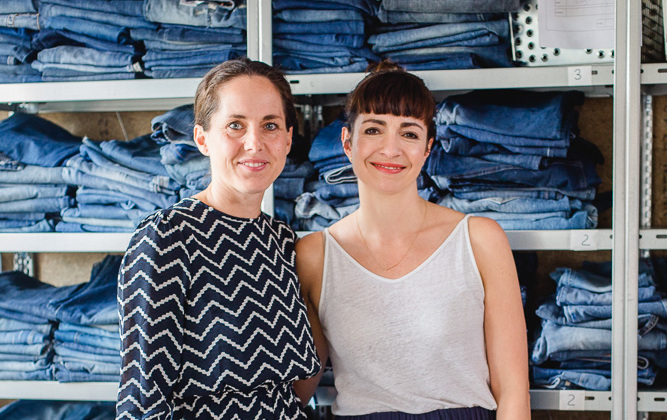
Picture Credits: Bridge&Tunnel

Bridge&Tunnel, a social business based in Hamburg-Wilhelmsburg, is a great example of how discarded textiles and hidden talents can be transformed into real opportunities.

Introduction
This article is part of the Circular Impact Champion interview series of the Circular Impact Procurement Initiative (CIPI). In this series, we present social businesses with circular solutions that generate ecological and social impact. In each edition, we speak with founders or decision-makers who are creating new pathways for the circular economy in procurement and supply chains.

Through the Circular Impact Procurement Initiative (CIPI), we support innovative social businesses that offer circular solutions and thereby advance social and ecological progress. One of these businesses is Bridge&Tunnel from Hamburg-Wilhelmsburg, a social fashion label and textile manufactory that transforms old jeans, discarded workwear and textile surplus into new designs, connecting circular economy with social inclusion. Under the motto “We design society,” Bridge&Tunnel designs bags, accessories, clothing and B2B products from used textiles while strengthening women facing social disadvantage and refugees, who find their first regular employment subject to social insurance contributions in the manufactory.

Our Program Director at Yunus Environment Hub and CIPI lead, Kiara Winona Sweeney, recently met with Constanze Klotz, one of the two founders of Bridge&Tunnel, for a conversation. In the interview, Constanze explains the idea behind Bridge&Tunnel, how the business applies circular economy principles and what ecological and social impact is created through the work of the Hamburg textile manufactory.

Interview

Kiara: What is the business idea behind Bridge&Tunnel? What problem do you solve, and what inspired you to found this business?

Constanze Klotz: With Bridge&Tunnel, we are fully committed to “Circular goes Social,” meaning a circular economy that always considers people as well. We give textiles a second chance and, at the same time, women who are otherwise barely visible in the labour market. In our manufactory in the heart of Hamburg, we work with women facing social disadvantage and refugees to create handmade designs from used textiles, from bags and accessories to home textiles and tailor-made B2B products.

Our founding story began with a textile co-working space for fashion and textile designers in Hamburg-Wilhelmsburg, which my co-founder Hanna Charlotte Erhorn and I built at the time. There, we saw that, on the one hand, there were young designers who wanted to produce locally and fairly but could not find a suitable workshop. On the other hand, there were women from the neighbourhood who could sew fantastically well, for example opulent Turkish wedding fashion, but who had never had a chance at regular employment subject to social insurance contributions because they lacked the “paper,” meaning formal qualifications.

The moment when a German-Turkish sewing club from a mosque moved into our co-working space became the trigger for us. We saw the talent these women had, while at the same time realising how many people in Germany have lived here for 15 or 20 years without ever having been in regular employment, simply because they lack certificates. From this, our principle “talents over diploma” emerged: in craftsmanship, skill and motivation matter more than formal qualifications.

At the same time, we observed how trucks full of used textiles arrived every day at a clothing collection point on our commercial site. In 2014, the issue of textile waste was not nearly as visible as it is today, but we realised what resources were quite literally lying around, especially in the denim sector. The clothing collection point told us: “We have jeans until we drop,” and that was how the idea was born to build our own upcycling label from discarded jeans, bringing ecological, social and economic sustainability together.

Today, that is exactly what we do: we develop durable products with social impact from used textiles, for end customers and for businesses that want to transform their fabric leftovers into circular products.

Kiara: Bridge&Tunnel is based on the principles of the circular economy. How do you integrate these principles concretely into your business model, and which strategies make your approach stand out?

Constanze Klotz: The fashion industry is still largely organised in a linear way: clothing is produced, worn for a short time and then disposed of. We try to turn this line into a circle by significantly extending the lifespan of textiles. In concrete terms, this means that we work almost exclusively with materials that are already in circulation, such as old jeans, discarded workwear, production surplus, returns, sample goods, outdated merchandise or old trade fair banners.

From these textile leftovers, we develop new designs and keep the materials in circulation instead of using new resources. In practice, this is usually upcycling rather than recycling: we do not first break the materials down into their fibres, but continue using the existing fabrics, structures and colours. This creates patchwork designs and unique pieces with a story, especially in the denim sector. Our “Fifty Shades of Blue” aesthetic for jeans shows that sophisticated collections can be created from pre-loved denim.

A second strong pillar is our B2B upcycling service. Companies bring their leftovers to us, such as old banners, discarded workwear or faulty merchandise, and we develop tailor-made products from them, including shoppers, laptop sleeves, hip bags or onboarding kits, which then circulate within the company again. This creates small closed loops: textiles that were previously marketing banners or work jackets return to the company as new products, including a story and, if desired, a QR code showing the social and ecological impact.

What differentiates us from many other upcycling approaches is, on the one hand, our consistent Made in Germany production in Hamburg and, on the other hand, the connection between circularity and social inclusion. We show that circular economy can be structurally integrated into a business model, including a professional manufactory, social impact jobs and a growing B2B customer base.

Kiara: Your product clearly aims to protect the environment. Could you explain the ecological impact in more detail? How does the use of your upcycling products compare to conventional textiles or single-use solutions? What is the difference?

Constanze Klotz: We see ourselves a little bit as a “freezer” for CO₂. In a way, we freeze the emissions stream of the textile industry by skipping the beginning of the chain. Conventional textile production causes enormous CO₂ emissions, from fibre cultivation to spinning, weaving, dyeing and sewing, all the way to global transport routes. Cotton in particular, the basic material from which jeans are made, has a particularly poor CO₂ footprint in relation to the often short period of use.

Because we work with textiles that already exist and would otherwise be disposed of, this entire upstream production block is eliminated. We start where the products already exist: at clothing collection points, in warehouses for discarded workwear or in companies’ leftover stock. Every shopper made from pre-loved jeans or every bag made from banner material means that no new material has to be produced and that fewer textiles end up as waste in countries in Africa or in textile deserts such as the Atacama Desert.

Our CO₂ balance is therefore significantly better than that of newly produced textiles. In addition, we save water, energy and chemicals that would otherwise be used in fibre cultivation and processing. Because we produce locally in Hamburg and source many materials regionally, transport routes are short compared to the global supply chains of the fast fashion industry. At the same time, we often extend the lifespan of resources by many years, because a “discarded” product becomes a durable design piece that can continue to be used.

We keep considering whether we should calculate the CO₂ savings in detail. The potential is certainly substantial. Personally, however, I find the topic of social inclusion almost even more exciting. The ecological impact is embedded in our model: less new production, less waste and more use cycles for materials that have already been produced.

Kiara: Beyond the environmental benefits, Bridge&Tunnel is a social business. What social impact does your business aim to achieve?

Constanze Klotz: In short: we make women visible and strong. In our manufactory, only women who experience social disadvantage work. Almost all of them have a refugee or migration background. In addition, there are women with other barriers in their biographies, such as a deaf seamstress or colleagues coming from vocational rehabilitation measures.

Many of the first-mentioned women come to Germany without knowledge of the system and without formal qualifications, which makes access to the labour market extremely difficult. Our approach is to start precisely there. With our “talents over diploma” principle, we hire based on ability, not on certificates. All employees are employed in regular jobs subject to social insurance contributions. For many, this is their first regular employment in Germany, which has enormous effects on self-efficacy, financial independence and social participation.

We create an environment in which women can develop their skills, build self-confidence and carry their experiences into their communities. For us, design is a means to an end. Through high-quality, marketable products, we make the previously invisible work of textile workers visible, with a focus on appreciation, female empowerment and participation. In doing so, we also show externally what potential lies in women who are often overlooked by the conventional system.

Kiara: Who, in your view, can benefit most from your solution? Describe your ideal customers, and could you give a few examples of how customers use Bridge&Tunnel products?

Constanze Klotz: In the B2B sector, essentially any company that has textile leftovers or old materials can benefit from us, as well as any company looking for sustainable, meaningful products for employees and customers. Typical cases are companies that regularly produce trade fair banners, replace workwear or have merchandise with an outdated logo sitting in storage. Instead of disposing of these materials, they come to us, and we turn them into new trade fair equipment, bags or accessories, for example, which can then be used again at the stand the following year.

Our favourite scenarios are onboarding packages and company goodies where sustainability, diversity and female empowerment are meant to be lived credibly. Companies that want to give these values a tangible form develop tailor-made products with us that circulate internally and remind employees every day that circular economy and social inclusion are part of the company’s DNA.

When it comes to customers, we are happy about the full range: from NGOs such as Greenpeace or Sea Shepherd to Hamburg-based companies and larger brands and medium-sized businesses. One example I particularly like is our project with Aurubis. We placed containers on the factory premises where employees could drop off their discarded jeans. These were turned into laptop sleeves, with small copper nuggets from Aurubis production attached to the zippers. This created a very tangible circular link between material, company and employees.

With companies such as Levi’s, Tchibo, Hellmann and FC St. Pauli, we have also implemented upcycling projects in which production surplus or faulty textiles were transformed into new bags, hip bags or cosmetic bags. For us, the ideal customers are organisations that want to actively communicate this story, meaning they do not only use the product, but also make the impact behind it visible.

Kiara: Finally, one last question: What comes next for Bridge&Tunnel? How do you see the future of the textile industry, and the role of your business within it?

Constanze Klotz: We very much hope that the political regulations from Brussels, with keywords such as DPP, EPR and ESPR, will become real game changers and structurally strengthen circular business models with social impact. We need transparency about who puts how many textiles on the market and what happens to them at the end of their life. Currently, no manufacturer discloses its production volumes, and the consequences can be seen in textile deserts around the world.

We clearly see our role on the solution side. We want to show how circular economy can work in practice with local production and social inclusion, as a blueprint for how textile flows can be organised differently while also creating new employment models. At the same time, we are realistic: the past ten years have shown how volatile the world is, which is why we rarely plan more than six months ahead. What matters to us is continuing to expand our B2B business, launching our new B2B website and reaching even more companies that want to transform their leftovers into impact products.

Looking ahead, we would like to employ more women, build additional partner workshops and further professionalise our offering in the areas of upcycling, repair and services such as Re.Vive. If circular economy in the textile industry can move from a niche experiment to a standard approach, with social businesses like Bridge&Tunnel as established players in the value chain, then we will have come a significant step closer to our goal of being part of the solution rather than part of the problem.

Picture Credits: Bridge&Tunnel

[German Version]

In Hamburg-Wilhelmsburg zeigt das Social Business Bridge&Tunnel, wie aus aussortierten Textilien und verborgenen Talenten echte Perspektiven entstehen.

Einstieg 

Dieser Artikel ist Teil der Interviewreihe Circular Impact Champion der Circular Impact Procurement Initiative (CIPI). Darin stellen wir gemeinwohlorientierte Unternehmen mit zirkulären Lösungen vor, die ökologische und soziale Wirkung erzielen. In jeder Ausgabe führen wir ein Gespräch mit Gründerinnen oder Entscheidungsträgerinnen, die neue Wege für die Kreislaufwirtschaft in der Beschaffung und in Lieferketten beschreiten. 

Im Rahmen der Circular Impact Procurement Initiative CIPI unterstützen wir innovative, gemeinwohlorientierte Unternehmen, die zirkuläre Lösungen anbieten und damit gesellschaftlichen und ökologischen Fortschritt vorantreiben. Eines dieser Unternehmen ist Bridge&Tunnel aus Hamburg-Wilhelmsburg – ein Social-Fashion-Label und eine Textilmanufaktur, die aus alten Jeans, ausgedienter Arbeitskleidung und textilen Überschüssen neue Designs fertigt und damit Kreislaufwirtschaft mit sozialer Teilhabe verbindet. Unter dem Motto „We design society“ designt Bridge&Tunnel Taschen, Accessoires, Kleidung und B2B-Produkte aus Alttextilien und stärkt gleichzeitig gesellschaftlich benachteiligte Frauen und Geflüchtete, die in der Manufaktur eine erste sozialversicherungspflichtige Beschäftigung finden. 

Unsere Programmdirektorin bei Yunus Environment Hub und CIPI-Verantwortliche, Kiara Winona Sweeney, hat sich kürzlich mit Constanze Klotz, einer der beiden Gründerinnen von Bridge&Tunnel, zu einem Gespräch getroffen. Im Interview erklärt Constanze die Idee hinter Bridge&Tunnel, wie das Unternehmen Prinzipien der Kreislaufwirtschaft anwendet und welche ökologische und soziale Wirkung durch die Arbeit in der Hamburger Textilmanufaktur entsteht.

Interview 

Kiara: Was ist die Geschäftsidee hinter Bridge&Tunnel? Welches Problem löst ihr damit, und was hat euch inspiriert, dieses Unternehmen zu gründen? 

Constanze Klotz: Wir setzen mit Bridge&Tunnel „volle Pulle“ auf Circular goes Social – also Kreislaufwirtschaft, die immer auch die Menschen mitdenkt. Wir geben Textilien eine zweite Chance und gleichzeitig Frauen, die auf dem Arbeitsmarkt sonst kaum sichtbar sind. In unserer Manufaktur mitten in Hamburg fertigen wir mit gesellschaftlich benachteiligten Frauen und Geflüchteten handgemachte Designs aus Alttextilien – von Taschen und Accessoires über Home-Textiles bis hin zu maßgeschneiderten B2B-Produkten. 

Unsere Gründungsgeschichte beginnt mit einem textilen CoWorking-Space für Mode- und Textildesignerinnen in Hamburg-Wilhelmsburg, den meine Mitgründerin Hanna Charlotte Erhorn und ich damals aufgebaut haben. Dort haben wir gesehen: Auf der einen Seite gibt es junge Designer:innen, die lokal und fair produzieren wollen und keine passende Werkstatt finden. Auf der anderen Seite waren da Frauen aus dem Stadtteil, die fantastisch nähen konnten – zum Beispiel opulente türkische Hochzeitsmode –, aber nie eine Chance auf eine sozialversicherungspflichtige Anstellung hatten, weil ihnen der „Zettel“ fehlt, also formale Qualifikationen. 

Der Moment, in dem ein deutsch-türkischer Nähclub aus einer Moschee in unseren CoWorking-Space umzog, war für uns der Auslöser. Wir haben dort erlebt, welches Talent in diesen Frauen steckt – und gleichzeitig erkannt, wie viele Menschen in Deutschland seit 15, 20 Jahren hier leben, ohne jemals in einem regulären Arbeitsverhältnis gewesen zu sein, schlicht, weil Zeugnisse fehlen. Daraus entstand unser Prinzip „talents over diploma“: Im Handwerk zählt Können und Motivation mehr als formale Abschlüsse. 

Parallel dazu haben wir beobachtet, wie täglich LKWs voller Alttextilien in eine Kleiderkammer auf unserem Gewerbehof rollten. 2014 war das Thema Textilmüll in dieser Deutlichkeit noch längst nicht so präsent, aber uns wurde klar, welche Ressourcen da sprichwörtlich „auf er Straße liegen“ – gerade im DenimBereich. Die Kleiderkammer sagte uns: „Jeans haben wir bis zum Umfallen“, und damit war die Idee geboren, aus ausrangierten Jeans ein eigenes Upcycling-Label aufzubauen, das ökologische, soziale und ökonomische Nachhaltigkeit zusammenbringt. 

Heute machen wir genau das: Wir entwickeln aus Alttextilien langlebige Produkte mit social impact – für Endkund:innen und für Unternehmen, die ihre Stoffreste in zirkuläre Produkte verwandeln wollen. 

Kiara:Bridge&Tunnel basiert auf den Prinzipien der Kreislaufwirtschaft. Wie integriert ihr diese Prinzipien konkret in euer Geschäftsmodell, und welche Strategien zeichnen euren Ansatz besonders aus? 

Constanze Klotz: Die Modeindustrie ist nach wie vor stark linear organisiert: Kleidung wird produziert, kurz getragen und dann entsorgt. Wir versuchen, aus dieser Linie einen Kreis zu machen, indem wir die Lebensdauer von Textilien deutlich verlängern. Das heißt konkret: Wir arbeiten fast ausschließlich mit Materialien, die bereits im Umlauf sind – alte Jeans, ausgemusterte Arbeitskleidung, Produktionsüberschüsse, Retouren, Sampleware, ausgediente Merchandise-Artikel oder alte Messebanner. 

Aus diesen Textilresten entwickeln wir neue Designs und halten die Materialien so im Kreislauf, statt neue Ressourcen zu verbrauchen. Praktisch ist das meist Upcycling und nicht Recycling: Wir zerlegen die Materialien nicht erst in ihre Fasern, sondern nutzen vorhandene Stoffe, Strukturen und Farben weiter – so entstehen Patchwork-Designs und Unikate mit Geschichte, besonders im Denim-Bereich. Unsere „Fifty Shades of Blue“-Ästhetik bei Jeans zeigt, dass man aus pre-loved Denim anspruchsvolle Kollektionen gestalten kann. 

Ein zweites starkes Standbein ist unser B2B-Upcyclingservice. Unternehmen bringen ihre Reste zu uns – alte Banner, ausgediente Workwear, fehlerhaftes Merch – und wir entwickeln daraus maßgeschneiderte Produkte wie Shopper, Laptop-Sleeves, Hipbags oder Onboarding-Kits, die wiederum im Unternehmen zirkulieren. So entstehen kleine Closed Loops: Textilien, die vorher ein Marketing-Banner oder eine Arbeitsjacke waren, kommen als neue Produkte zurück ins Unternehmen – inklusive Story und auf Wunsch QRCode zum sozialen und ökologischen Impact. 

Was uns von vielen anderen Upcycling-Ansätzen unterscheidet, ist zum einen unsere konsequente Made-in-Germany-Produktion in Hamburg, zum anderen die Verknüpfung von circular mit sozialer Teilhabe. Wir zeigen, dass man Kreislaufwirtschaft strukturell in ein Geschäftsmodell integrieren kann – inklusive professioneller Manufaktur, Social-Impact-Arbeitsplätzen und einem wachsenden B2B-Kund:innenstamm. 

Kiara:Euer Produkt zielt eindeutig darauf ab, die Umwelt zu schonen. Könnt ihr näher auf die ökologischen Auswirkungen eingehen? Wie schneidet die Nutzung eurer Upcycling-Produkte im Vergleich zu herkömmlichen Textilien oder Einweg-Lösungen ab – was ist der Unterschied? 

Constanze Klotz: Wir verstehen uns ein bisschen als „Freezer“ für CO – wir frieren gewissermaßen den Emissionsstrom der Textilindustrie ein, indem wir den Anfang der Kette überspringen. Klassische Textilproduktion verursacht enorm viel CO: vom Faseranbau über Spinnen, Weben, Färben und Konfektion bis hin zu globalen Transportwegen. Gerade Baumwolle, der Grundstoff aus dem Jeans sind, hat einen besonders schlechten CO-Fußabdruck im Verhältnis zur oft kurzen Nutzungsdauer. 

Da wir mit Textilien arbeiten, die bereits vorhanden sind und eigentlich entsorgt würden, fällt dieser komplette vorgelagerte Produktionsblock weg. Wir starten da, wo die Produkte bereits existieren: bei Kleiderkammern, im Lager für ausgemusterte Arbeitskleidung oder in den Restpostenregalen von Unternehmen. Jeder Shopper aus pre-loved Jeans oder jede Tasche aus Bannermaterial bedeutet, dass kein neues Material produziert werden muss – und dass weniger Textilien als Müll in Ländern wie Afrika oder in Textilwüsten wie der Atacama Wüste landen. 

Unsere CO-Bilanz ist dadurch deutlich besser als bei neu produzierten Textilien; zusätzlich sparen wir Wasser, Energie und Chemikalien ein, die sonst im Faseranbau und in der Verarbeitung anfallen würden. Da wir lokal in Hamburg fertigen und viele Materialien regional akquirieren, sind die Transportwege kurz im Vergleich zu globalen Lieferketten der Fast-Fashion-Industrie. Gleichzeitig verlängern wir die Nutzungsdauer von Ressourcen oft um viele Jahre, weil aus einem „ausgedienten“ Produkt ein langlebiges Designstück entsteht, das weiterhin genutzt werden kann. 

Wir überlegen immer wieder, ob wir die CO-Einsparungen detailliert ausrechnen – das Potenzial ist auf jeden Fall erheblich –, aber persönlich finde ich das Thema soziale Teilhabe fast noch spannender. Die ökologische Wirkung ist in unserem Modell integriert: weniger Neuproduktion, weniger Müll, mehr Nutzungszyklen für bereits produzierte Materialien. 

Kiara:Über die Vorteile für die Umwelt hinaus ist Bridge&Tunnel ein gemeinwohlorientiertes Social Business. Welche sozialen Auswirkungen strebt ihr mit eurem Unternehmen an? 

Constanze Klotz: Kurz gesagt: Wir machen Frauen sichtbar und stark. In unserer Manufaktur arbeiten ausschließlich Frauen, die gesellschaftliche Benachteiligung erfahren – fast alle haben eine Flucht- oder Migrationsgeschichte. Dazu kommen Frauen mit anderen Hürden im Lebenslauf, etwa eine gehörlose Näherin oder Kolleginnen aus beruflichen Reha-Maßnahmen. 

Viele der erstgenannten Frauen kommen nach Deutschland ohne Systemkenntnisse und ohne formale Abschlüsse; das macht den Zugang zum Arbeitsmarkt extrem schwierig. Unser Ansatz ist, genau hier anzusetzen: Mit unserem „talents over diploma“-Prinzip stellen wir auf Basis von Können ein, nicht auf Basis von Zeugnissen. Alle Mitarbeiterinnen sind sozialversicherungspflichtig beschäftigt – für viele ist es die erste reguläre Anstellung in Deutschland, was enorme Effekte auf Selbstwirksamkeit, finanzielle Unabhängigkeit und gesellschaftliche Teilhabe hat. 

Wir schaffen einen Rahmen, in dem die Frauen ihre Fähigkeiten entfalten, Selbstvertrauen aufbauen und ihre Erfahrungen in ihre Communities tragen können. Design ist für uns Mittel zum Zweck: Über hochwertige, marktfähige Produkte machen wir die bisher unsichtbare Arbeit von Textilarbeiterinnen sichtbar – mit Fokus auf Wertschätzung, Female Empowerment und Teilhabe. Dadurch zeigen wir auch nach außen, welches Potenzial in Frauen steckt, die im konventionellen System oft durchs Raster fallen. 

Kiara:Wer kann eurer Meinung nach am meisten von eurer Lösung profitieren? Beschreibt eure idealen Kunden – und könnt ihr ein paar Beispiele nennen, wie Kunden Bridge&Tunnel-Produkte einsetzen? 

Constanze Klotz: Im B2B-Bereich kann im Grunde jedes Unternehmen von uns profitieren, das textile Reste oder Altmateralien hat – oder das nachhaltige, sinnstiftende Produkte für Mitarbeitende und Kund:innen sucht. Typische Fälle sind Firmen, die regelmäßig Messebanner produzieren, Arbeitskleidung austauschen oder Merch mit veraltetem Logo im Lager liegen haben. Statt diese Materialien zu entsorgen, kommen sie zu uns – und wir machen zum Beispiel neues Messe-Equipment, Taschen oder Accessoires daraus, die im nächsten Jahr wieder auf dem Stand eingesetzt werden. 

Unsere Lieblingsszenarien sind Onboarding-Packages und Unternehmens-Goodies, bei denen das Thema Nachhaltigkeit, Diversität und Female Empowerment glaubwürdig gelebt werden soll. Unternehmen, die diesen Werten ein „stoffliches“ Gesicht geben wollen, entwickeln mit uns maßgeschneiderte Produkte, die intern zirkulieren und Mitarbeitende täglich daran erinnern, dass Kreislaufwirtschaft und soziale Teilhabe Teil der Unternehmens-DNA sind. 

Bei den Kund:innen freuen wir uns über die ganze Bandbreite: von NGOs wie Greenpeace oder Sea Shepherd über Hamburger Unternehmen bis hin zu größeren Marken und Mittelständlern. Ein Beispiel, das ich besonders mag, ist unser Projekt mit Aurubis: Wir haben auf dem Werksgelände Container aufgestellt, in denen Mitarbeitende ihre ausgedienten Jeans einwerfen konnten. Daraus wurden Laptop-Sleeves gefertigt, an deren Reißverschluss kleine Kupfernuggets aus der Aurubis-Produktion angebracht wurden – ein sehr greifbarer, zirkulärer Link zwischen Material, Unternehmen und Mitarbeitenden. 

Mit Unternehmen wie Levi’s, Tchibo, Hellmann oder auch dem FC St. Pauli haben wir darüber hinaus Upcycling-Projekte umgesetzt, bei denen aus Produktionsüberschüssen oder fehlerhaften Textilien neue Taschen, Hipbags oder Kosmetiktaschen entstanden. Die ideale Kundschaft sind für uns Organisationen, die diese Geschichte aktiv mitkommunizieren wollen – also nicht nur das Produkt nutzen, sondern auch den Impact dahinter sichtbar machen. 

Kiara:Zum Schluss noch eine Frage: Wie geht es weiter mit Bridge&Tunnel? Wie seht ihr die Zukunft der Textilindustrie – und die Rolle eures Unternehmens dabei? 

Constanze Klotz: Wir hoffen sehr, dass die politischen Regulierungen aus Brüssel – Stichworte DPP, EPR, ESPR – echte Game Changer werden und zirkuläre Geschäftsmodelle mit sozialem Impact strukturell stärken. Es braucht Transparenz darüber, wer wie viele Textilien auf den Markt bringt und was am Ende damit passiert; aktuell legt kein Hersteller seine Produktionsvolumina offen, und die Folgen sieht man in Textilwüsten weltweit. 

Unsere Rolle sehen wir klar auf der Lösungsseite: Wir wollen zeigen, wie Kreislaufwirtschaft mit lokaler Produktion und sozialer Teilhabe konkret funktionieren kann – als Blaupause, wie man Textilströme anders organisieren und gleichzeitig neue Beschäftigungsmodelle schaffen kann. Gleichzeitig sind wir realistisch: Die letzten zehn Jahre haben gezeigt, wie volatil die Welt ist, daher planen wir selten weiter als sechs Monate voraus. Wichtig ist uns, unser B2B-Geschäft weiter auszubauen, unsere neue B2B-Website zu launchen und noch mehr Unternehmen zu erreichen, die ihre Reste in Impact-Produkte verwandeln wollen. 

Perspektivisch möchten wir mehr Frauen einstellen, weitere Partnerwerkstätten aufbauen und unser Angebot im Bereich Upcycling, Repair und Services wie Re.Vive weiter professionalisieren. Wenn es gelingt, dass Kreislaufwirtschaft in der Textilbranche vom Nischenexperiment zum Standard wird – mit Social Businesses wie Bridge&Tunnel als festen Playern in der Wertschöpfung – dann wären wir unserem Ziel, Teil der Lösung statt Teil des Problems zu sein, ein großes Stück näher.

Picture Credits: Bridge&Tunnel