
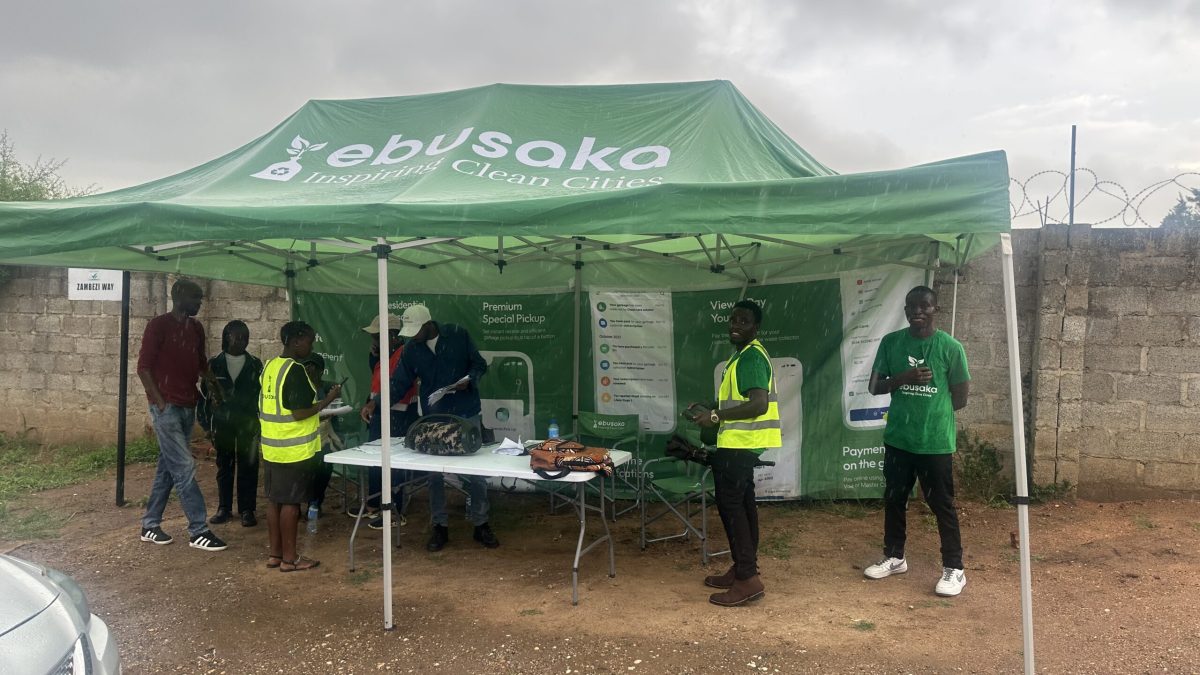
Across African cities, waste management systems are under growing pressure and in Lusaka, Zambia there is no exception. In response, Ebusaka Green Technology Limited is developing a digital, data-driven approach to improve how waste is collected, tracked, and managed, while placing inclusion and accountability at the center of the system.
Building on insights from its Innovate2PREVENT (I2P) pilot, Ebusaka’s work demonstrates how technology, community engagement, and just transition principles can come together to strengthen urban waste management and create better outcomes for households, informal waste workers, and municipalities alike.
What inspired you to start Ebusaka?
The idea for Ebusaka came in 2020, during the COVID-19 pandemic, when the challenges in Zambia’s waste management system became impossible to ignore. In my own neighborhood, garbage sometimes goes uncollected for weeks. Because I come from a background in technology, I explored how data and digital tools can change this.
If we can collect and analyze information on where waste is generated, who needs it, and how it moves through the system, we can create efficiency and accountability.
This approach aligns closely with our work to digitize waste management operations and fee collection in Lusaka. This is the same principle we had from the beginning — using data to make systems smarter and more transparent.
How did you test your pilot to integrate waste workers in the collection process?
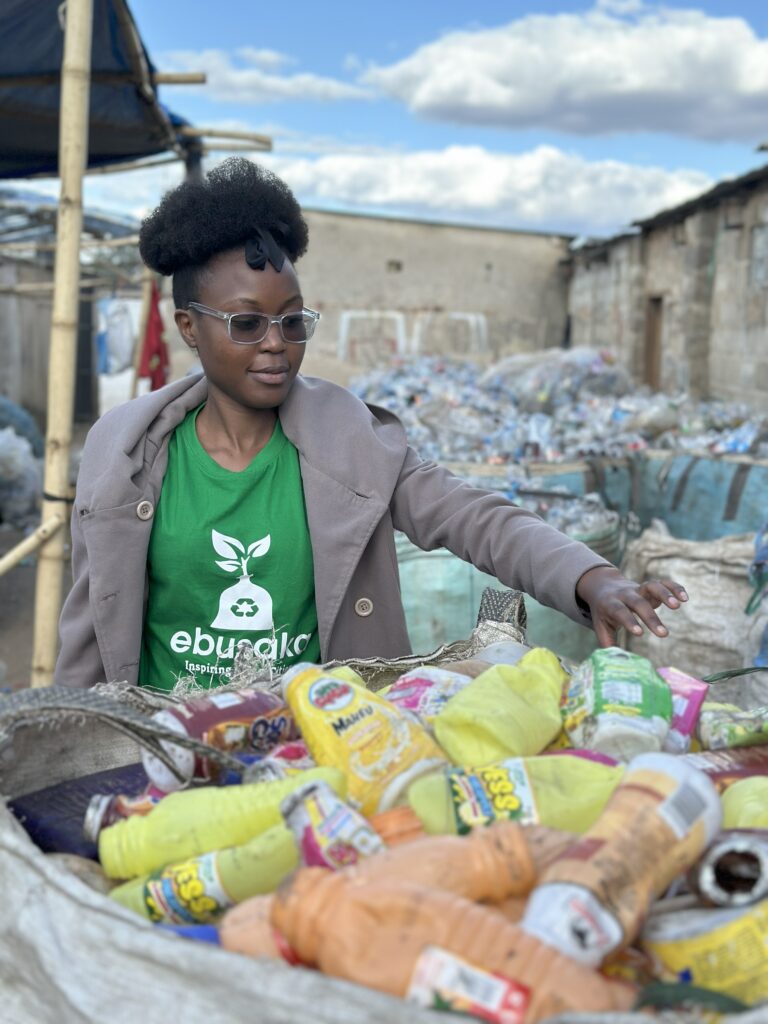
As Ebusaka unlocked the possibility to segregate and collect waste at source, it was critical for us to involve waste pickers in the upstream process, as valuable recyclables would no longer reach the landfills where they were working. This aspect was what we worked on together with the support of the Innovate2PREVENT program, and with our coach at Yunus Environment Hub, to ensure waste pickers were not left out of the new system.
Waste separation at the household level was a completely new concept for most residents in Lusaka, and so to better understand community behavior, we began by speaking directly with the waste pickers.
Once the community saw the waste pickers coming in with protective gear provided by the pilot funding, everything started to shift positively. The gear not only boosted the confidence of the waste pickers themselves but also changed how they were perceived by the community. For the first time, they were seen as professionals rather than scavengers.
For the I2P pilot, we ran a small MVP to test our model and assumptions while working with five waste pickers. During the first week alone, we managed to serve over 100 households, and people embraced the waste segregation model because they saw the value it brought to their neighborhoods.
What were some challenges and lessons from your pilot?
We ran the pilot on a very short timeline, which made it difficult to maximize everything we wanted to test. Our recycling app was not yet ready, and delays in sourcing custom-made equipment slowed things down further.
Despite those challenges, the pilot was full of important lessons. We quickly learned that recyclers only come to collect once you have at least 30 bags of sorted waste. That meant we needed to set up an aggregation center where materials could be bundled before going to the recyclers. We also saw how powerful incentives can be: when people understood that recycling creates economic benefits for waste pickers, they were much more motivated to participate.
These learnings gave us a clearer roadmap for the future. They showed us not just the gaps in the system, but also the opportunities to scale a recycling initiative that is efficient, inclusive, and community-driven.
Collaboration is at the heart of Ebusaka. How do you work with local players?
From the beginning, we knew it was important to engage the right stakeholders. We started by mapping out everyone in the waste management ecosystem, from households and waste pickers to municipal councils. Each group had very different priorities. For example, waste pickers needed protective gear and decent work, households wanted timely and reliable collection, and councils were more focused on data monitoring and accountability.
By having open conversations with these groups, we were able to understand their realities and design a system that truly worked for them. Combining that local knowledge with data-driven insights became one of our biggest strengths; it ensured our app addressed real problems rather than assumptions and helped create a model that responds to people’s actual needs.
This collaborative approach positions Ebusaka as a bridge between municipal systems and community innovation. It reflects the understanding that sustainable change requires approaches that connect data, people, and policy.
How do you see Ebusaka scaling in the future?
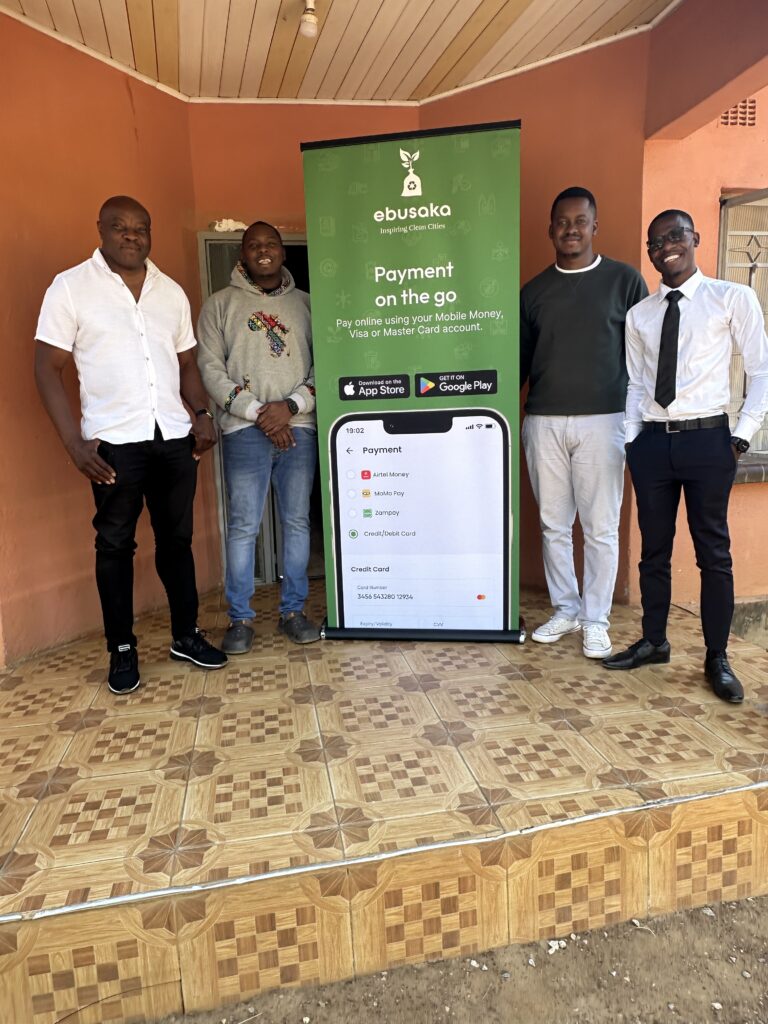
For us, scaling has evolved from testing our recycling app to implementing a full-scale digital solution that can support citywide waste management operations. Ebusaka is working toward digitizing waste management processes across Lusaka, integrating data from households, waste collectors, and recyclers into one connected platform.
This marks a major shift from reaching 1,700 households during the entire pilot to enabling a system that can support the municipality in collecting fees for waste services, improving operational efficiency, and promoting accountability. It’s about moving from localized innovation to institutionalized impact.
What excites us most is how this digital infrastructure can empower everyone in the value chain. Waste pickers will have better access to structured opportunities, households will benefit from reliable, trackable collection services, and the city will gain a transparent overview of waste flows that can guide long-term policy and planning. Ultimately, this will help reduce harmful carbon emissions, keep waste out of landfills, and create cleaner, healthier communities for everyone.
We want to serve all of Lusaka which would be over 500,000 households and 50,000 businesses, while integrating approximately 500 informal waste workers into the recycling collection process. Households will be incentivized to segregate and recycle through discounts applied in the app, which in turn helps waste pickers increase income through the sale of recyclable waste. This will build on the pilot tested during I2P, equipping workers with protective gear, digital devices, training, and tools to improve working conditions, supported through revenue generated from waste collection services. Additionally we intended on expanding internationally.
Through this process, Ebusaka is embedding the principles of just transition and data-driven management piloted during I2P into Lusaka’s waste management system, creating a blueprint for other cities across Africa to follow.
Ebusaka shows how vision, data, and collaboration can transform waste collection.
YEH is incredibly proud of the progress made by Ebusaka, a powerful example of how social business models can drive holistic impact.
Stay informed about Ebusaka’s progress and upcoming rollout: https://web.ebusaka.com/